
2026-05-07·
A Deep Dive Into The Origin And The Sound Of The Duduk, Its Role In Current Western Culture And For The Armenian Identity
The duduk is an ancient Armenian double-reed woodwind instrument carved from aged apricot wood, with roots stretching back over two thousand years to the era of King Tigran the Great. Its hauntingly warm and melancholic tone, achieved through circular breathing and traditionally played in pairs, has made it a deeply cherished symbol of Armenian culture and earned it UNESCO Masterpiece of Intangible Heritage status in 2008.
By Susanne Hessmann
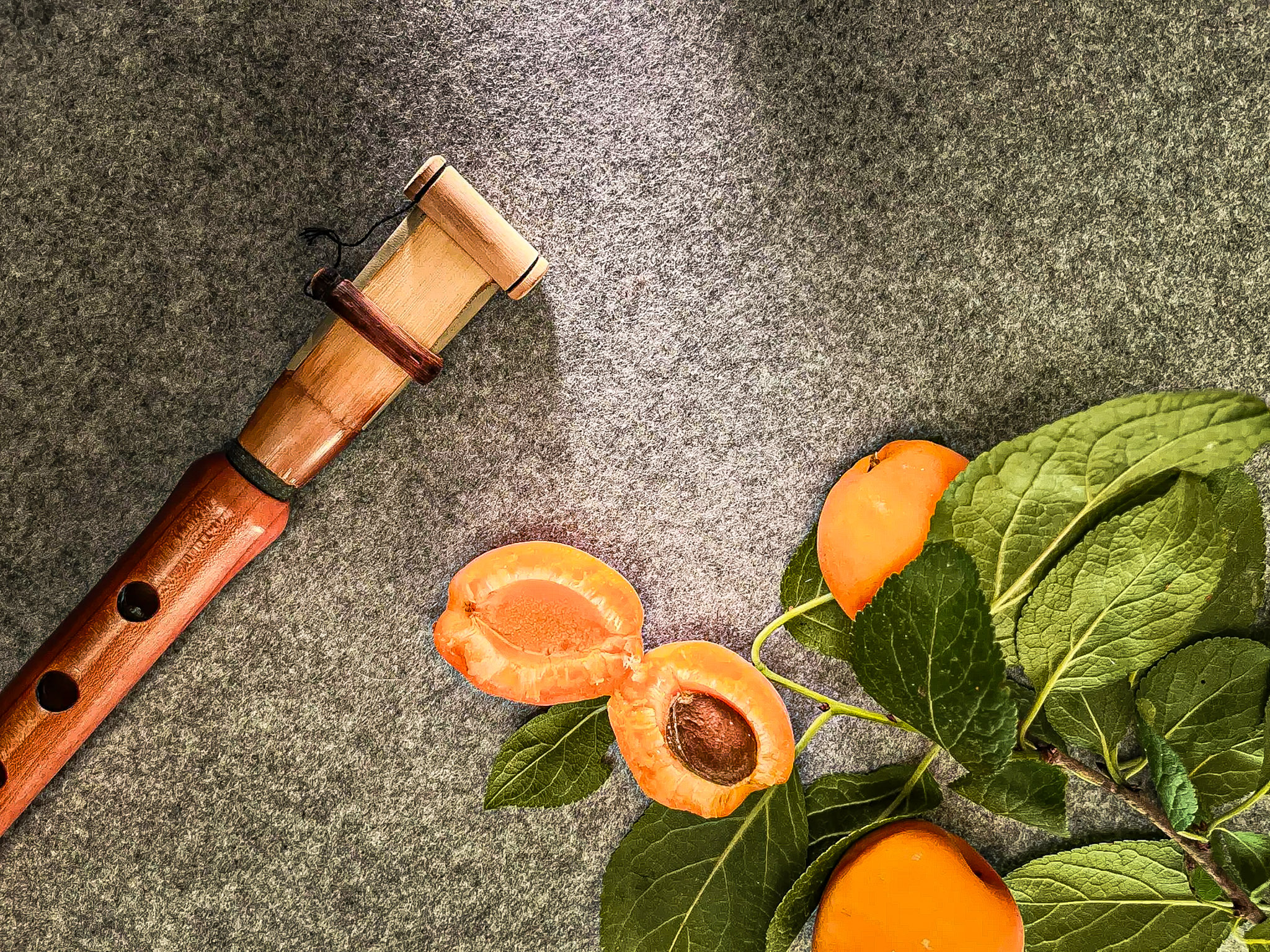
Overview of the instrument, the history and the typical sound
The Duduk is an ancient double-reed wood wind instrument, made of the wood of the apricot tree with its origin in Armenia two thousand years ago. The duduk was traced back to the times of the Armenian King Tigran the Great (95-55 BC). In the Armenian language the instrument is called “tsiranapogh” - the apricot tree pipe. “Tsirani” is the Armenian word for the fruit “apricot”, a national symbol.
Similar instruments were discovered in the Arabian world and later variants of the duduk appeared in neighboring regions and throughout the Caucasus and the Middle East, including Georgia, Azerbaijan, Turkey Iran and Russia, with different tuning, made of different woods or different designs.
To create a duduk the apricot wood has to be aged and dried sometimes for up to 20 or 30 years to achieve the right solidity to make the best duduk. The instruments are built and tuned by experienced players and duduk makers. The technique to build them, tune them and the play them is passed down from generation to generation.
The duduk and its mournful sound have become a symbol for Armenia in the home country as well as in the Armenian diaspora all around the world. The warm and melancholic sound of the duduk, usually played as a pair with a second duduk - one player providing a constant drone and the lead duduk playing the melody - is achieved with a special circular breathing technique, enabling a hypnotic sound that never stops for breathing pauses.
Unlike other double-reed instruments like the oboe, the duduk has a very large double-reed in proportion to its total size. Due to the reed that is flattened on one side and cylindrical on the other, and the cylindrical body with eight holes above and two below (one for the thumb and the other for the tuning) the duduk’s sound is closer to an English horn than the oboe or the bassoon.
It is said to have specifically been developed to produce a warm, soft tone which is closer to a human voice than to a reed - unlike other more nasal sounding woodwind instruments. The range encompasses and octave and a third and duduks are available in different tunings, the most popular used being the A.
Myth, mystic, mysterious: the creation of mood and atmosphere in movies
In 2005, the UNESCO proclaimed the Armenian duduk and its music a Masterpiece of the Intangible Heritage of Humanity and included it in 2008. But why is it so popular in film soundtracks?
The sound of the duduk and the melodies played on the duduk can give goosebumps to listeners who are sensitive to music, like “The Shepard’s Song” by Artak Asatryan. Imagine hearing this song as the camera flies over an Armenian landscape.
Page 1 of 3