
2026-05-07·
A Deep Dive Into The Origin And The Sound Of The Duduk, Its Role In Current Western Culture And For The Armenian Identity
The duduk is an ancient Armenian double-reed woodwind instrument carved from aged apricot wood, with roots stretching back over two thousand years to the era of King Tigran the Great. Its hauntingly warm and melancholic tone, achieved through circular breathing and traditionally played in pairs, has made it a deeply cherished symbol of Armenian culture and earned it UNESCO Masterpiece of Intangible Heritage status in 2008.
By Susanne Hessmann
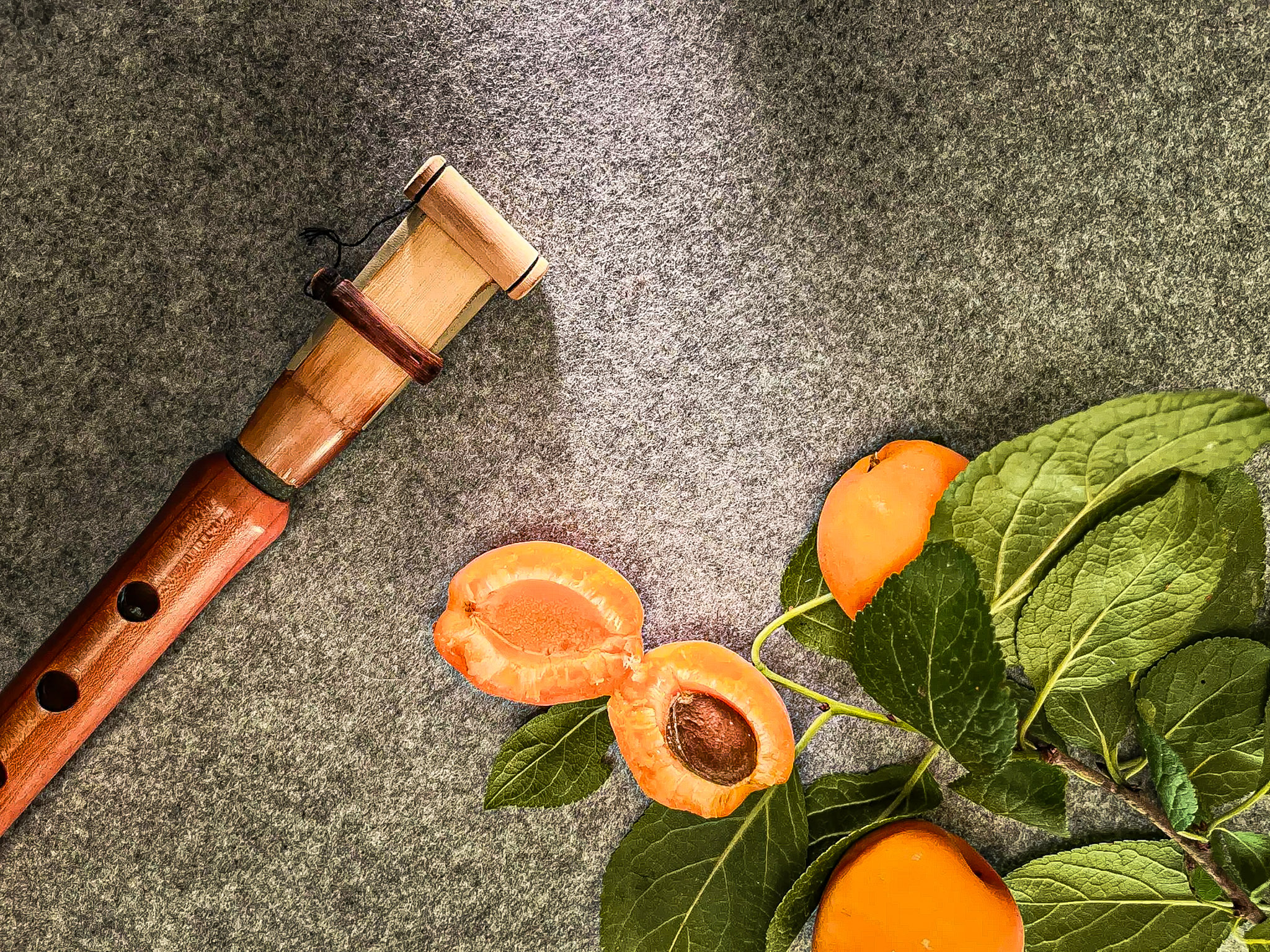
The duduk sound with its vibrato, sometime voice-like or haunting like the singing saw, can also have a violin-like drone and is ideal for a movie soundtrack to suggest loneliness and sadness or to create a mystical enigmatic atmosphere. No surprise it is often used to illustrate mystical places and mythological narratives in movie and TV show soundtracks.
A great example is Martin Scorsese's ”The Last Temptation of Christ”( 1988) with Peter Gabriel's score that helped to introduce the duduk into the popular world music genre.
When it’s not used in an explicit Armenian context, illustrating Armenia and its landscapes and people, the duduk sound can evoke a general Middle Eastern atmosphere like in biblical or historical movies as in “The Last Temptation Of Christ”. Duduk music is also used more and more often to create a feeling of mysterious otherworldliness in Hollywood movies, as opposed to the Western world, and sets a contrast – or it’s an expression of the alienation of a protagonist in a “strange” world.
Other examples where the duduk creates the distinct enigmatic and mythological atmosphere are TV shows like “The Crow”, “Xena, the Warrior Princess” and film soundtracks like “Blood Diamond” by James Newton Howard and “The Russia House” by Jerry Goldsmith and Gladiator.
The composer of the soundtrack for Mel Gibson’s “The Passion of Christ” (2004), John Debney, compared the duduk to a human voice and said he used it a reflection of the past and distant countries. The duduk player on the soundtrack is Pedro Eustache who had started to learn duduk from Djivan Gasparyan in 1994 in L.A..
In 2002 Ravi Shankar held a concert dedicated to the memory of George Harrison in London, which included a song with a duduk solo. Shankar wrote this duduk solo for Pedro Eustache, who had played the duduk in “The Passion of Christ “. Paul McCartney was in the audience and asked to be introduced to Pedro Eustache. McCartney then invited the musician to play duduk on his 2005 album “Chaos and Creation in Paradise” on the song “Jenny Wren”.
More and more film score composers add the instrument to their compositions for those reasons. The duduk also included in the repertoire of the ancient classics expert Jordi Saval who dedicated several albums to the Armenian ancient instrument.
Sadness and solace: The duduk in context to Armenian history and the genocide
It’s impossible to not associate the duduk sound with sadness. Not only for Armenians who listen to the duduk traditionally played at funerals and other family events - also in context of the terrible crimes of the Armenian genocide in 1915, eliminating 75 per cent of the population1 and driving the surviving Armenians into exile, one cannot not associate the music with this immense tragedy for the Armenian people.
Page 2 of 3